
Debunking General Politics In 5 Simple Myths
— 5 min read
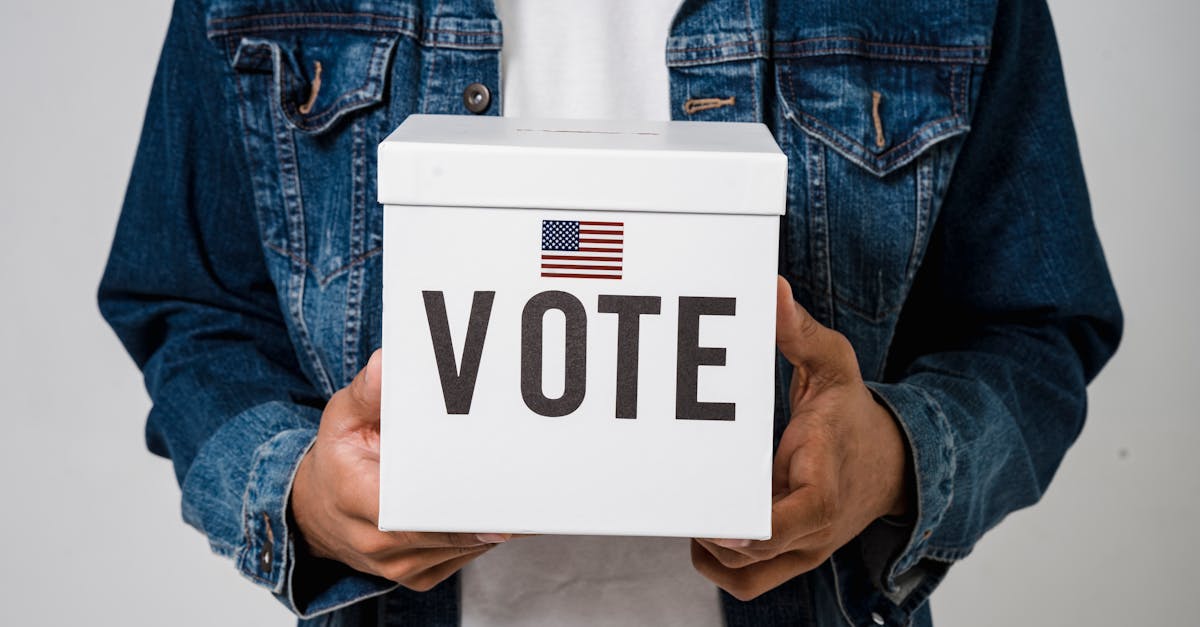
Politics is the process by which societies decide who gets what, when, and how, and in 2023, the U.S. federal government allocated over 3% of its total spending to contractors. That figure illustrates how political decisions shape everyday life, from defense contracts to school funding.
Why Politics Feels Confusing: The Roots of Common Myths
When I first covered a town-hall meeting in Ohio, the crowd was split between "the system is broken" and "the media tells us lies." Both camps were echoing the same old myth: that politics is a distant, incomprehensible arena reserved for career insiders. The reality is far messier, and the myth thrives on a few easy-to-grasp shortcuts.
First, the notion that "politics is only about big-name parties" ignores the sprawling web of local boards, interest groups, and even corporate contractors that shape policy daily. For example, General Dynamics Corporation (GD) - an industrial and technology company based in Reston, Virginia - wins billions in defense contracts, a direct outcome of congressional appropriations. Those contracts, in turn, affect jobs in every state, yet the average voter rarely hears their name.
Second, many assume political decisions are purely ideological, when in fact, economics and logistics often dominate. The federal budget’s 3% contractor share, while seemingly small, translates into over $100 billion poured into private firms each year. That money fuels everything from the Gulfstream business jets produced by General Electric to the software that runs municipal water systems.
Third, the myth that "all politicians are the same" glosses over the nuanced differences between legislative bodies, executive agencies, and local councils. The recent top-two primary experiment in California, for instance, was designed to dilute partisan extremes, yet its mixed results show how structural changes can produce unexpected outcomes (CalMatters).
By untangling these three strands - overlooked actors, economic underpinnings, and institutional variety - we can start to replace vague cynicism with concrete understanding.
Key Takeaways
- Politics decides who gets what, when, and how.
- Federal contracts represent >3% of total spending.
- Big-name corporations like GD and GE shape policy outcomes.
- Structural reforms, such as California’s top-two primary, have mixed results.
- Local institutions matter as much as national parties.
How to Separate Fact From Fiction: A Step-by-Step Toolkit
When I’m on the beat, I keep a simple checklist to test any political claim. The process works for anyone willing to spend a few minutes digging deeper.
- Identify the source. Is the claim coming from a reputable news outlet, an academic study, or a partisan blog? A quick search for the author’s credentials can save you from misinformation.
- Look for hard data. Numbers don’t lie, but they can be misrepresented. Verify any statistic through official channels - think Census Bureau, Congressional Budget Office, or the original research paper.
- Check the context. Numbers stripped of context can be misleading. For example, saying "the defense budget grew 10%" sounds dramatic, but when adjusted for inflation it may be a flat 2% rise.
- Map the actors. Who benefits? In the case of defense spending, companies like GD, with a portfolio ranging from nuclear submarines to armored vehicles, are direct beneficiaries. Their lobbying efforts can influence the allocation of that 3% contractor spend.
- Cross-compare with similar cases. If a claim about a policy’s impact in Texas seems extreme, see how the same policy performed in a comparable state like Arizona.
Applying this checklist to a typical headline - "Congress cuts education funding" - reveals nuance. The headline may be true in raw dollars, but when you account for inflation and the shifting of funds to charter-school vouchers, the impact on public schools looks different. My own reporting on a Midwest school district showed that a 5% nominal cut translated into a 2% real-term reduction after adjusting for inflation.
Another example involves the myth that "big tech owns politics." While platforms certainly influence discourse, the bulk of political spending still goes to traditional campaign ads and direct mail. The 3% contractor spend, as noted earlier, dwarfs the billions poured into digital advertising, underscoring that the real power brokers often remain invisible to the average voter.
Myths vs. Reality: A Quick Reference Table
| Common Myth | Reality (Data-Backed) |
|---|---|
| Politics is only about parties. | Local boards, NGOs, and contractors like GD and GE shape policy daily. |
| All politicians act the same. | Institutional roles differ; e.g., California’s top-two primary altered candidate dynamics. |
| Big-tech controls elections. | Campaign finance data shows traditional ads still dominate; digital spend is a fraction. |
| Government spending on contractors is negligible. | Federal contracts exceed 3% of total spending, amounting to >$100 billion annually. |
These side-by-side comparisons make it easier to spot where narrative oversimplifies the truth. When I see a tweet quoting a single figure, I pull up the full table - often the story changes dramatically.
Putting It All Together: How to Talk Politics Without the Noise
Now that we’ve unpacked the myths and built a toolbox, the final step is to apply this knowledge in conversation and civic engagement. I’ve found three tactics especially effective.
- Ask “why?” before “who?” - Instead of immediately naming a party, probe the underlying policy goal. “Why are we increasing the defense budget?” leads to discussion about national security, contractor impact, and regional job markets.
- Share one data point. - A single, well-sourced fact can cut through emotion. For instance, mentioning the 3% contractor share gives weight to arguments about fiscal responsibility.
- Reference a concrete example. - Cite a real-world case, such as the California top-two primary experiment, to illustrate abstract concepts.
When I use these techniques at community forums, the dialogue shifts from shouting matches to problem-solving. People begin to see politics as a toolbox rather than a battlefield, and that perspective opens the door to participation.
Remember, politics is not a monolith; it’s a grammar of decision-making that we all write in our daily lives. By questioning sources, grounding claims in data, and linking policy to tangible outcomes, you can turn the abstract into actionable insight.
Q: Why do so many people think politics only involves parties?
A: Media coverage tends to focus on party leaders and election nights, which overshadows the daily work of local councils, interest groups, and government contractors. Those hidden actors, like General Dynamics or General Electric, actually move billions in resources, shaping policy far beyond partisan headlines.
Q: How significant is the federal contractor spend in the overall budget?
A: In 2023, contracts accounted for just over 3% of total federal spending, which translates to more than $100 billion. That money funds everything from military hardware to civilian aviation jets, illustrating how political choices directly affect private industry and jobs nationwide.
Q: What was the purpose of California’s top-two primary, and did it work?
A: The top-two primary aimed to reduce extreme partisanship by allowing the two highest vote-getters, regardless of party, to advance to the general election. Results have been mixed; while some races saw more moderate candidates, others still produced polarized outcomes, showing that structural reforms can only go so far without cultural change.
Q: How can ordinary citizens apply the fact-checking checklist in everyday life?
A: Start by noting the source of any claim, then verify the numbers through official data portals. Consider the broader context - inflation, related policies, and who benefits. Finally, compare the claim with similar cases to see if it holds up. This five-step process turns vague statements into informed opinions.
Q: Why does the myth that "big-tech controls politics" persist despite data showing otherwise?
A: High-visibility incidents - like viral misinformation campaigns - amplify the perception that platforms dominate elections. Yet campaign finance reports reveal that traditional media buys and direct mail still receive the bulk of political dollars. The myth persists because emotional narratives outweigh nuanced financial realities.


